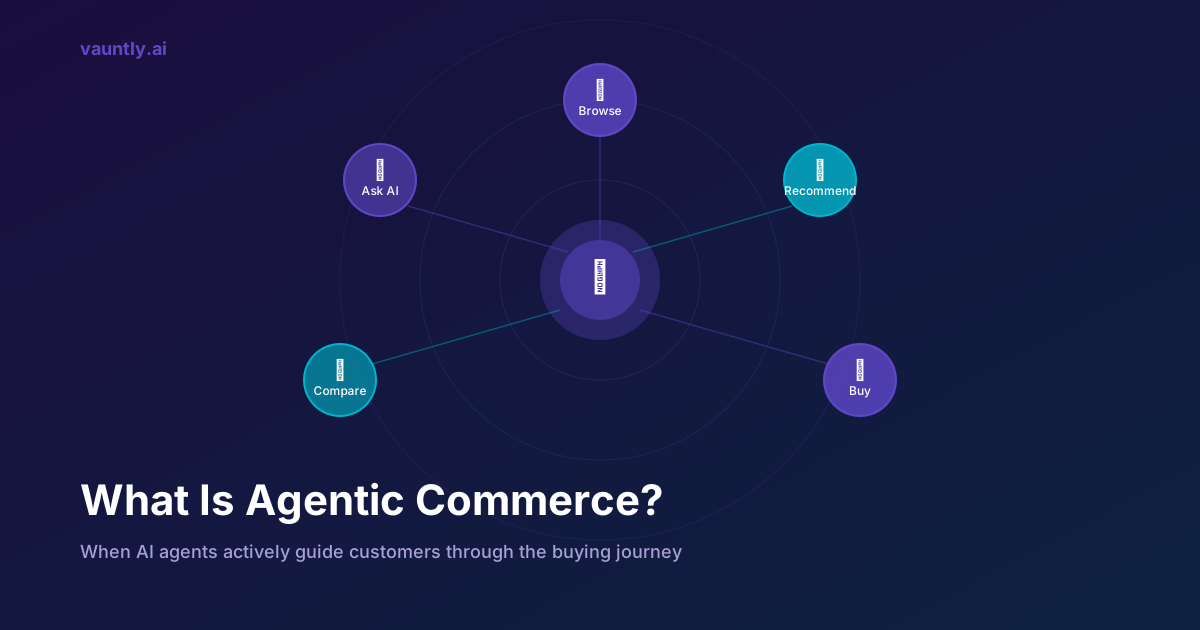
What Is Agentic Commerce?
AI agents are becoming the new businessfront. Here's what agentic commerce means, why it's happening now, and what it means for your business.
The way people discover and buy products is changing faster than most businesses realise.
For decades, the purchase journey looked the same: a person opens a browser, searches, clicks through pages, reads descriptions, and eventually checks out. The human was doing every step.
That's starting to break.
The shift to agent-driven shopping
AI assistants — Claude, ChatGPT, Gemini, and others — are increasingly handling the discovery and evaluation work on behalf of users. Someone asks "find me a foundation that matches my skin tone and ships by Friday" and the agent does the rest: searches catalogs, compares options, checks inventory, and returns a curated answer.
This is agentic commerce: the complete purchase journey, driven by an AI agent rather than a human navigating a website.
Why now?
Three things converged:
1. Language models got good at reasoning over product data. Modern models can parse a catalog, compare attributes, understand fit signals, and make recommendations that feel genuinely personalised — not keyword-matched.
2. Structured tool-calling became standard. The Model Context Protocol (MCP) and OpenAPI function-calling give AI agents a standardised way to query product databases, check inventory, and initiate checkout without scraping HTML.
3. Agent-native payment rails appeared. Stripe's Agent Commerce Protocol (ACP) and similar protocols let an agent authenticate, create a cart, and complete a purchase — without a human entering a card number.
What this means for businesses
If your product data is messy, incomplete, or buried in unstructured HTML, agents skip you. They favour websites with:
- Clean, normalised attributes — size, colour, material, compatibility — structured, not in a paragraph
- Accurate inventory signals — real-time stock, variant availability
- Semantic descriptions — rich enough for a model to match intent, not just keywords
- An accessible tool layer — an API or MCP server the agent can actually call
Businesses who invest in this now will be discoverable in the agent channel. Those who don't will be invisible to it.
The Vauntly approach
Vauntly.ai plugs into your existing backend stack - whether custom, Shopify, Magento or others - and handles the transformation: enriching your catalog, scoring your current readiness, and deploying a tool server agents can query directly.
No replatforming. No engineering sprint. Your business becomes agent-ready in your first session.